Clear Direction. Better Decisions. Stronger Accountability.
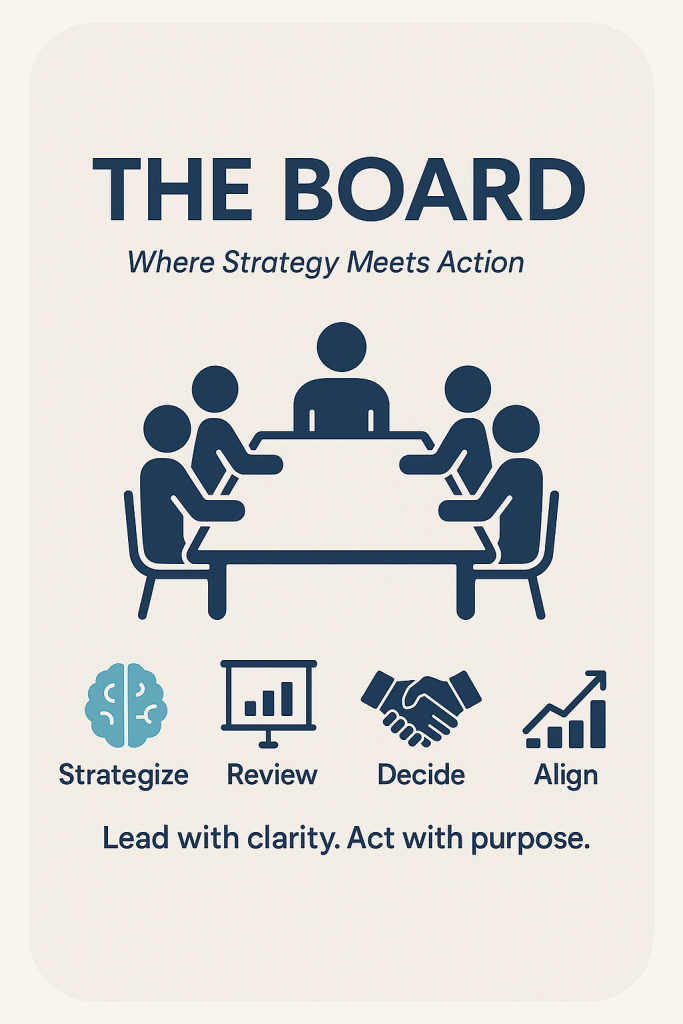
The Board helps businesses, institutions, ventures, and project teams stay focused on what matters, make important decisions, and keep execution aligned with their goals.
Organizations often know where they want to go.
The challenge is maintaining discipline along the way.
Priorities change.
Projects drift.
Important decisions remain unresolved.
Risks are discussed but not followed up.
Responsibilities become unclear.
Meetings happen without enough action afterward.
The Board helps bring structure to these moments.
Tell Pesewa ONE what the organization is trying to achieve, what decisions are outstanding, and where leadership needs greater visibility.
The Board helps organize the information, surface the issues that require attention, prepare decisions, record what has been agreed, and follow through on what needs to happen next.
You do not need another governance dashboard.
You need clarity about what matters, what needs to be decided, and who needs to act.
What The Board Can Do for Your Organization
Keep Leadership Focused on the Most Important Priorities
Organizations can easily become consumed by activity.
The Board helps leadership distinguish between:
– What is urgent
– What is important
– What can wait
– What requires a decision
– What needs additional information
– What is not progressing
– What could threaten the organization’s objectives
The aim is to keep management attention focused on the issues that have the greatest impact on outcomes.
Not everything belongs on the Board agenda. The right things do.
Prepare Better Decisions
Important decisions often arrive with incomplete information, conflicting views, or unclear alternatives.
The Board can help prepare the decision by organizing:
– The question to be decided
– Relevant background
– Available evidence
– Alternatives
– Risks
– Costs
– Expected benefits
– Trade-offs
– Outstanding uncertainties
– Recommendations
Instead of beginning a meeting with a pile of documents, leaders can begin with a clearer understanding of:
What exactly are we deciding?
What do we know?
What are the options?
What are the consequences?
Identify What Leadership Still Needs to Know
Sometimes the right decision cannot yet be made.
The Board can work with Gap Data Mapping and other Pesewa ONE capabilities to identify:
– Missing information
– Unverified assumptions
– Weak evidence
– Important questions
– Unclear risks
– Data that needs updating
– Stakeholders who need to be consulted
Rather than allowing uncertainty to remain hidden, The Board helps make it explicit.
If more information is needed, know exactly what needs to be found out.
Turn Meetings Into Decisions and Actions
A meeting is only useful if something changes afterward.
The Board can help structure leadership meetings around:
– Decisions
– Priorities
– Risks
– Progress
– Issues requiring escalation
– Actions
– Owners
– Deadlines
Afterward, Pesewa ONE can help maintain a record of:
What was decided.
Who is responsible.
What needs to happen next.
When it should be completed.
This helps reduce the gap between discussion and execution.
Keep Track of What Was Agreed
Organizations frequently revisit the same questions because nobody remembers exactly what was decided.
The Board can maintain continuity around:
– Previous decisions
– Strategic priorities
– Commitments
– Assigned responsibilities
– Important assumptions
– Outstanding actions
– Changes in direction
– Board or management resolutions
Leadership gains a reliable organizational memory.
Decisions should not disappear when the meeting ends.
Follow Up on What Needs to Happen
Good governance does not stop when a decision is approved.
The Board can work with Pesewa Workflow to help track:
– Actions arising from meetings
– Deadlines
– Responsible persons
– Progress
– Outstanding deliverables
– Required approvals
– Follow-up questions
– Escalations
This keeps strategy connected to what people are actually doing.
Show Where Execution Is Falling Behind
Leadership needs to know when something important is not progressing.
The Board can help surface:
– Missed milestones
– Delayed initiatives
– Unresolved decisions
– Repeated operational problems
– Resource constraints
– Dependencies
– Performance concerns
– Areas where ownership is unclear
The purpose is not to generate more reporting.
It is to tell leadership where attention is needed.
Track Strategic Priorities
Organizations often have many projects but only a few truly strategic priorities.
The Board can help maintain visibility over:
– Key strategic objectives
– Major initiatives
– Expected outcomes
– Progress against milestones
– Major risks
– Important decisions
– Resource requirements
This helps leadership answer:
Are we still doing what we said mattered most?
Help Manage Strategic Trade-Offs
Organizations cannot do everything.
Leadership continually has to decide:
– Which project gets funded
– Which market to enter
– Which product to prioritize
– Which risk to accept
– Which initiative to stop
– Where people should be allocated
– Whether strategy needs to change
The Board can help organize these trade-offs so decisions are made deliberately rather than by default.
Keep Risk Visible
Risks often become urgent only after they have already caused damage.
The Board can help leadership maintain visibility over:
– Financial risks
– Operational risks
– Strategic risks
– Regulatory risks
– Technology risks
– People risks
– Project risks
– Reputation risks
Where appropriate, risks can be assigned owners, mitigation actions, and follow-up dates.
The purpose is not simply to maintain a risk register.
It is to make sure important risks lead to action.
Help Leaders Ask Better Questions
Strong governance is often less about having all the answers and more about asking the right questions.
The Board can help leadership examine:
What is changing?
What are we assuming?
What are we not seeing?
What is not working?
Where are we exposed?
What deserves more investment?
What should we stop doing?
What decision are we avoiding?
These questions help organizations remain intentional rather than reactive.
For Small and Growing Businesses
Strong governance should not be limited to large corporations.
A growing business may need help answering:
– What should we focus on this quarter?
– Are we making enough money?
– Which product should we grow?
– Should we hire?
– Should we borrow?
– Which customer problem needs attention?
– Are projects being completed?
– What risks should we be thinking about?
The Board can give smaller organizations the discipline of structured governance without requiring the bureaucracy of a large corporate board.
Small business does not have to mean informal decision-making.
For Larger Organizations and Institutions
The Board can help leadership teams, boards, committees, and senior managers organize:
– Strategic reviews
– Board papers
– Management meetings
– Performance reviews
– Decision briefs
– Risk discussions
– Project oversight
– Institutional priorities
– Follow-up actions
Pesewa ONE can help prepare the information and maintain continuity between meetings.
Leaders can spend less time assembling material and more time making decisions.
For Projects and Ventures
Some initiatives do not have a formal board but still require disciplined oversight.
The Board can support:
– Startups
– Business-as-ONE Projects
– Joint ventures
– Programs
– Partnerships
– Investment projects
– Development initiatives
The same principles apply:
What are we trying to achieve?
Are we on track?
What needs a decision?
What could stop us?
Who needs to act next?
Connected to Pesewa ONE
The Board can draw on the wider Pesewa ONE ecosystem to move from oversight to action.
Gap Data Mapping can identify missing information before decisions are made.
Pesewa Knowledge can research important questions.
Pesewa Workflow can track decisions and follow-up actions.
Day Book can provide ongoing operational information from businesses.
Pesewa Value can help with leadership, teams, and people issues.
Pesewa Opportunities can identify strategic opportunities.
Pesewa Experts can provide specialist advice.
Business-as-ONE Projects can execute larger initiatives.
Entrepreneur Managers can help follow through on agreed actions.
Pesewa AI can assist with analysis, synthesis, preparation, and monitoring behind the scenes.
The leadership team does not need to coordinate all of these capabilities separately.
The Board identifies what needs attention. Pesewa ONE helps mobilize what is required next.
Why The Board Matters
Organizations rarely fail because nobody is working.
They fail because activity becomes disconnected from direction.
Important decisions are delayed.
Priorities become unclear.
Risks remain unresolved.
Commitments are forgotten.
Projects continue long after they should have changed.
And leadership spends too much time reacting to what has already happened.
The Board helps create discipline around the questions that matter most.
Instead of:
“Here is a governance platform for your leadership team.”
Pesewa ONE says:
“Tell us what the organization is trying to achieve. We’ll help leadership stay focused on the decisions, risks, priorities, and actions that will determine whether you get there.”
Governance Should Lead to Action.
The Board is not another reporting system.
It is a strategic oversight service designed to help organizations maintain:
Direction.
Decision discipline.
Accountability.
Continuity.
Follow-through.
The Board
Know What Matters. Decide What Happens Next.
 Pesewa AI