Before You Decide, Know What’s Missing.
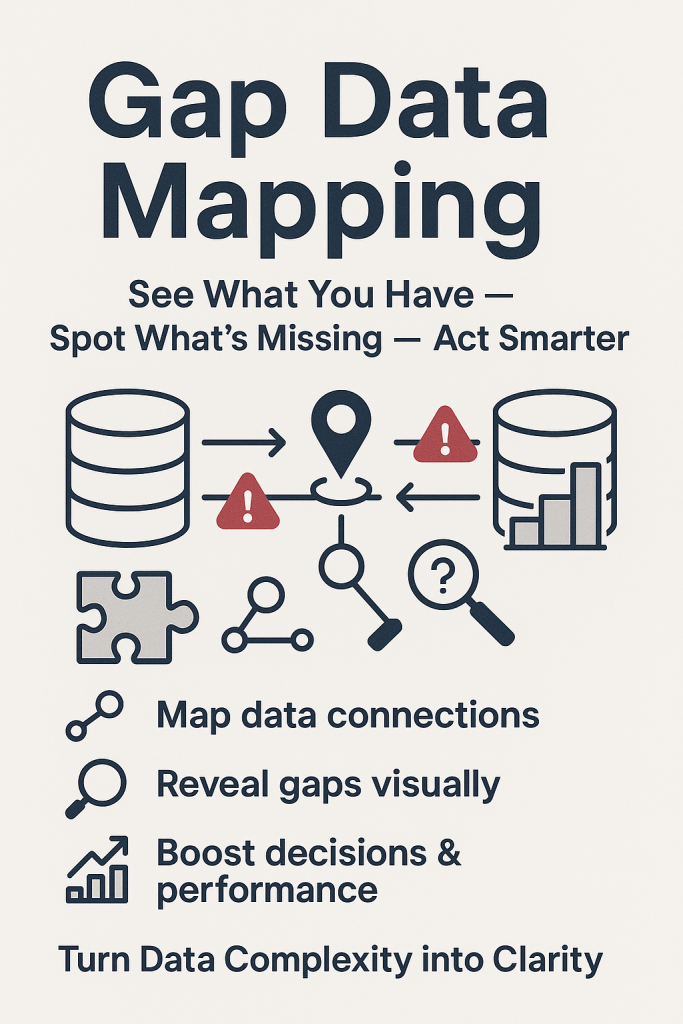
Gap Data Mapping helps businesses, governments, institutions and project teams identify the information they are missing before important decisions are made.
Planning a new market entry?
Considering an investment?
Trying to understand why performance is falling?
Preparing a strategy?
Launching a new product?
Evaluating a project?
Building a policy?
Trying to improve operations?
Tell Pesewa ONE the decision you are trying to make.
Gap Data Mapping helps determine:
What do you already know?
What information can you trust?
What is missing?
What assumptions are being made?
What should be investigated before you proceed?
Behind the scenes, Pesewa ONE can combine existing organizational data, research, interviews, market intelligence, expert knowledge, external sources, field information and AI to build a clearer picture around the decision.
You do not need to design a data architecture or learn another analytics platform.
Tell us what you are trying to decide. We help find what you still need to know.
What Gap Data Mapping Can Do for You
Start With the Decision
Gap Data Mapping does not begin by asking:
“What data do you have?”
It begins by asking:
“What are you trying to achieve or decide?”
For example:
Should we enter this market?
Why are our customers leaving?
Should we lend to this business?
Where should we open the next branch?
Why is this program not working?
Which customer segment should we target?
Are we ready to launch this product?
Once the objective is clear, Pesewa ONE can work backward to determine what information is actually required.
Show You What You Already Know
Organizations often possess more useful information than they realize.
It may be scattered across:
– Spreadsheets
– Reports
– Emails
– Databases
– Customer systems
– Financial records
– Surveys
– Presentations
– Staff knowledge
– Operational records
– Research documents
– Previous projects
Gap Data Mapping can help bring the relevant information together around the question being considered.
The objective is not to centralize every piece of information in the organization.
It is to identify what matters for the decision at hand.
Identify What Is Missing
Once the available information is understood, Gap Data Mapping can highlight gaps such as:
– Missing customer information
– Incomplete market data
– Weak financial records
– Unverified assumptions
– Missing competitor intelligence
– Insufficient operational information
– Inadequate performance measures
– Missing demographic information
– Poorly defined outcomes
– Weak historical records
– Missing stakeholder perspectives
– Unclear risk information
This helps leaders distinguish between:
What we know.
What we think we know.
What we do not know.
Find Weak or Unreliable Information
A data point can exist and still be unsuitable for a decision.
Gap Data Mapping can help identify information that may be:
– Outdated
– Incomplete
– Inconsistent
– Poorly defined
– Duplicated
– Biased
– Unsupported
– Too general
– Collected for a different purpose
– Based on weak assumptions
The question is not simply:
“Do we have data?”
It is:
“Is this data good enough for the decision we are about to make?”
Identify the Assumptions Behind the Decision
Many important decisions are built partly on assumptions.
For example:
“Customers will pay this price.”
“Demand will continue growing.”
“This market behaves like our current market.”
“The target population is large enough.”
“This technology will reduce costs.”
Gap Data Mapping can help surface these assumptions and identify which ones should be tested before significant resources are committed.
Make the assumptions visible before they become expensive.
Tell You What Needs to Be Collected Next
Finding a gap is only useful if you know what to do about it.
Gap Data Mapping can help create a practical information plan covering:
– What information is required
– Why it matters
– Where it may be available
– Who may have it
– How it could be collected
– How urgently it is needed
– What level of accuracy is required
– What the likely cost of obtaining it may be
This allows organizations to focus data collection on what will actually improve the decision.
Help Gather the Missing Information
Pesewa ONE does not have to stop after identifying the gap.
Where appropriate, the wider ecosystem can help collect or obtain the missing information through:
– Research
– Surveys
– Interviews
– Customer feedback
– Fieldwork
– Business records
– Market research
– Expert consultation
– Public data
– Partner information
– Operational data collection
– Day Book
– Other Pesewa ONE resources
The customer does not have to receive a report saying:
“More research is required.”
Pesewa ONE can help do the research.
Turn Missing Data Into Clear Questions
Large data gaps can feel overwhelming.
Gap Data Mapping can turn them into specific questions.
Instead of:
“We need more market data.”
the question might become:
“How many businesses in these five districts purchase this product each month?”
Instead of:
“We do not know our customers well enough.”
the question might become:
“Why did customers who bought once fail to purchase again within 90 days?”
Specific questions are easier to investigate, answer, and act on.
Prioritize the Gaps That Actually Matter
Not every missing piece of information deserves to delay a decision.
Gap Data Mapping can help distinguish between:
– Critical gaps
– Important but non-critical gaps
– Useful information
– Information that is unlikely to change the decision
This prevents organizations from spending time and money collecting data simply because it is available to collect.
The goal is not perfect information.
The goal is enough reliable information to make a better decision.
Prepare a Decision-Ready Picture
Once the important gaps have been addressed, Pesewa ONE can help bring the information together into something leaders can actually use.
This may include:
– Executive briefs
– Decision memos
– Market assessments
– Risk summaries
– Opportunity assessments
– Scenario comparisons
– Recommendations
– Management presentations
– Implementation priorities
– Outstanding uncertainties
The output should make clear:
What we know.
What remains uncertain.
What the evidence suggests.
What should happen next.
Examples of Gap Data Mapping in Action
Market Entry
A company says:
“We want to enter Ghana.”
Gap Data Mapping may ask:
– Who exactly is the target customer?
– How large is the market?
– What do customers currently buy?
– Who are the competitors?
– What regulations apply?
– Which distribution channels matter?
– What local partnerships are required?
Pesewa ONE can then help fill the most important gaps before the market-entry decision is finalized.
Small-Business Lending
A lender says:
“We want to lend more to small businesses.”
Gap Data Mapping may identify missing information around:
– Cash flow
– Sales history
– Inventory
– Customer demand
– Working-capital cycles
– Existing obligations
– Business-owner behavior
Pesewa ONE may then use Day Book, financial information, business records and other resources to help build a stronger understanding of the business.
New Product Launch
A company says:
“We want to launch this product.”
Gap Data Mapping may identify unanswered questions around:
– Customer demand
– Pricing
– Competition
– Distribution
– Product-market fit
– Customer willingness to switch
– Operational capacity
Those gaps can then be investigated before full launch.
Public Policy
A government institution says:
“We want to design a program for small businesses.”
Gap Data Mapping may help identify whether the institution actually knows:
– Who the target businesses are
– Where they are
– What constraints they face
– Which interventions they have already tried
– What support they actually want
– How success should be measured
Pesewa ONE can then help gather and organize the missing evidence.
Business Performance
A business says:
“Our sales are falling and we don’t know why.”
Gap Data Mapping may identify missing information about:
– Customer retention
– Pricing
– Competitors
– Sales channels
– Product availability
– Customer complaints
– Sales-team activity
– Market conditions
The organization can then investigate the gaps most likely to explain the decline.
Connected to Pesewa ONE
Gap Data Mapping can activate several other parts of the Pesewa ONE ecosystem.
Pesewa Knowledge can research missing information.
Day Book can help collect ongoing business data.
Pesewa Experts can provide specialist judgment.
Pesewa Content can organize complex information into useful briefs.
Pesewa Workflow can coordinate data-collection activities.
Pesewa Opportunities can identify external sources, partners or programs.
Business-as-ONE Projects can assemble teams to conduct larger research or diagnostic assignments.
Entrepreneur Managers can help gather information directly from businesses.
Pesewa AI can support analysis, comparison and synthesis behind the scenes.
The client does not need to determine which platform is required.
Pesewa ONE assembles the right resources around the unanswered question.
Why Gap Data Mapping Matters
Organizations often make bad decisions not because leaders are careless, but because important information is missing, weak, outdated, or assumed.
The problem is that those gaps are often invisible until after the decision has been made.
A market is entered.
Capital is invested.
A policy is launched.
A product is built.
A project begins.
Only then does the missing information become obvious.
Gap Data Mapping changes the order.
Instead of:
Decision → Action → Discover What We Didn’t Know
Pesewa ONE helps move toward:
Decision → Identify What We Need to Know → Fill Critical Gaps → Act
Before You Act, Find Out What You’re Missing.
Gap Data Mapping is not another analytics platform.
It is a decision-support service designed to reduce avoidable blind spots before important commitments are made.
Tell Pesewa ONE the decision you are facing.
We help determine what you know, what you don’t, and what you need to find out next.
Gap Data Mapping
Better Decisions Start With Knowing What’s Missing.
Get in touch at business@pesewaone.com.
 Pesewa AI